Interior Design Trends 2026-2027
What's next for American homes going forward?
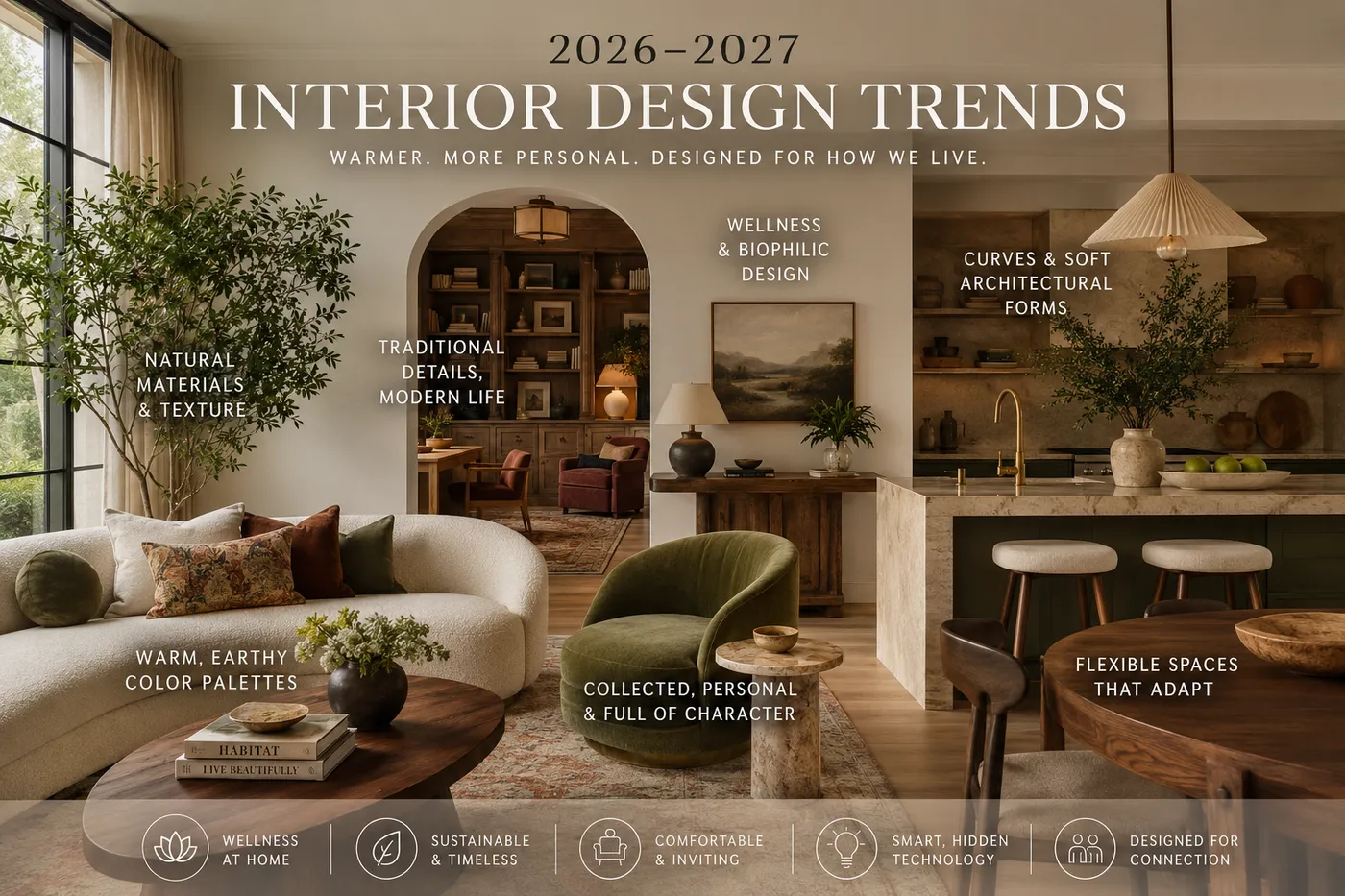
With the current landscape the way it is in regards to interest rates and recent real estate cycles, we at Coe Builders have noticed an uptick in homeowners choosing to stay put in their current home longer than they used to.
A 2026 Redfin/Ipsos survey of 4,000 U.S. residents found that 65% of homeowners who recently renovated said they did so instead of moving. Even more striking, 71% of homeowners planning to renovate in the next year said they are remodeling instead of buying another home.
https://www.redfin.com/news/press-releases/u-s-homeowners-are-remodeling-instead-of-relocating/
With that being said, homeowners have the dilemma of selling their home and giving up a low mortgage rate, then buying a new home at a higher price and interest rate, versus staying where they are and keeping a low interest rate and creating the perfect optimized spaces for their lives. We at Coe Builders believe that many people are going to go this route, so let's explore what trends have been happening recently!
Color themes are changing
Warm is replacing Neutral
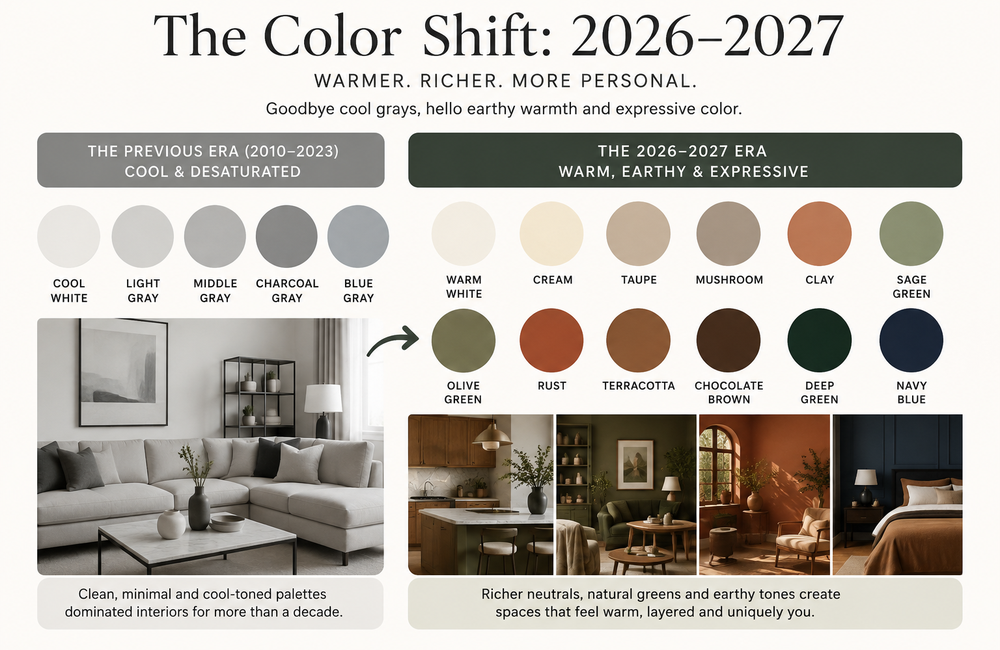
One of the clearest shifts in interior design is the move away from cool gray and stark white toward warmer, more nuanced colors.
Think chocolate brown, taupe, cream, earthy greens etc.
Houzz's 2026 search data shows significant increases in interest in rust colors, chocolate brown, mushroom, sage, taupe and cream.
This doesn't mean neutral interiors are disappearing. Instead, neutrals are becoming warmer and more dimensional.
A room might combine a creamy wall color with walnut cabinetry, taupe upholstery, aged brass hardware and accents of olive green. The result feels sophisticated without feeling sterile.
The recent data backs this up. Sherwin-Williams' 2027 Colormix forecast, titled Rewild, includes 48 colors organized around ideas of heritage, expressive color and connection to nature. The forecast includes deep greens, blues, reds, clays and other richer hues alongside versatile neutrals.
This points toward a growing willingness to use color as an emotional and architectural tool. Rather than adding one colorful pillow to an otherwise neutral room, homeowners are increasingly willing to create an immersive experience more closely tailored to what they prefer themselves rather than thinking ahead for a future sale. That could mean a deep green dining room, a moody blue bedroom or a richly colored home office.
Natural and reclaimed materials are being used more
Also in conjunction with warmer and more personalized color selections, customers are opting to go with more personalized selections in materials and styles, for the purpose of creating a more timeless design.
Houzz reported a 257% increase in searches for sandstone, while searches for linen wallpaper rose 104%, seagrass wallpaper 94%, Venetian plaster 94% and terracotta flooring 55%.
For example, A contemporary home can use limestone and white oak. A traditional home might combine walnut, plaster and linen. A coastal interior can incorporate rattan, woven grass and natural stone.
The common denominator is authenticity.
Traditional is getting blended with Modern
Another thing that's being reported is that the architecture itself is getting softer.
Traditional interiors are experiencing a renewed appreciation—but today's version is considerably more relaxed.
Homeowners are incorporating elements such as:
- Shaker-style cabinetry
- Wood furniture
- Millwork
- Wainscoting
- Vintage rugs
- Classic patterns
- Libraries and built-ins
- Traditional lighting
- Antique and vintage pieces
The result isn't necessarily a formal historical interior. Instead, traditional elements are being mixed with contemporary furniture, modern technology and more casual layouts.
This creates homes that feel established rather than overly decorated.
The resurgence of traditional craftsmanship is also connected to a larger desire for authenticity. Current American design coverage is highlighting handmade materials, heritage details and vintage textiles as ways to bring history and personality into contemporary homes.
The Bottom Line
The Future of Interior Design Is Personal to the Customer
The most important interior design trend for 2026 and 2027 may be the move toward intentional individuality.
National design trends provide inspiration, but the strongest interiors won't look identical.
One homeowner may embrace deep green walls and antique furniture. Another may prefer warm minimalism with oak, stone and linen. Someone else may create a colorful, nostalgic home filled with artwork and vintage pieces.
All of them can be current.
The common thread is that today's home is expected to do more than look beautiful. It should support how people work, rest, entertain, connect and recharge.
As we move through 2026 and into 2027, expect American interiors to become warmer, richer, more tactile, more flexible and more personal.
And perhaps that is the most lasting trend of all: designing a home that feels like it belongs to the people who live there.
If you need help with a remodel project and you're in the Dallas/Fort Worth area, please reach out and let's discuss your vision!